Financial highlights
Last trade 63.80€
Variation -0.44%
16/03/2026 - 05:38 PM
data source: Investis Digital
Financial highlights
Last trade 63.80€
Variation -0.44%
16/03/2026 - 05:38 PM
data source: Investis Digital
Financial Results & Reports
Press releases
Use of satellite navigation has become such a strongly rooted habit that we have practically forgotten how to use traditional, bulky printed maps.
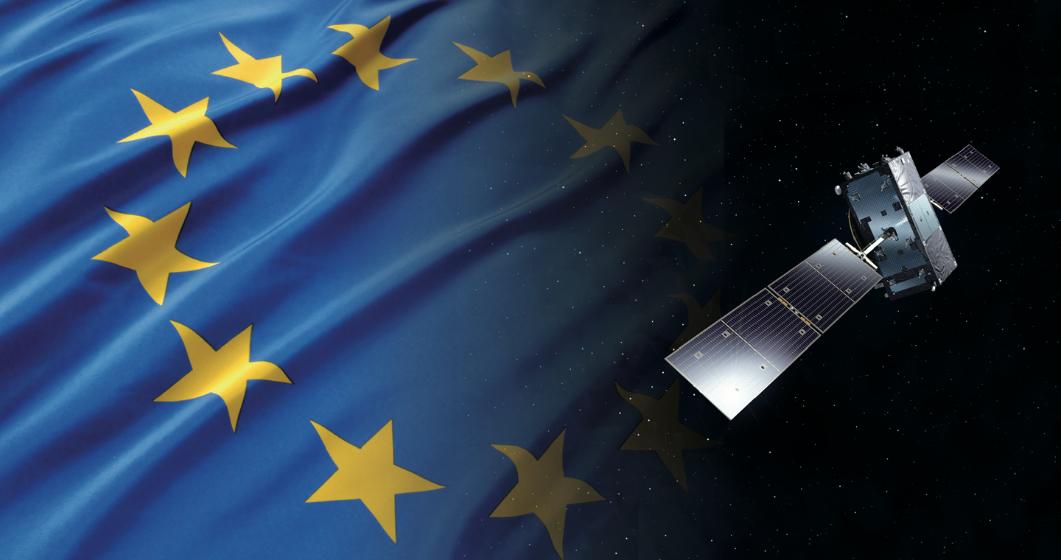
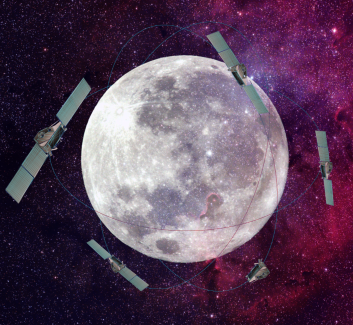
Many people consider satellite navigation as synonymous with GPS, which stands for Global Positioning System: the American system which is now the best-known in the world. The well-informed will know that GPS is not the only satellite system; there are other systems created to perform the same function. But few realise that one of the European Union’s biggest projects is the Galileo satellite navigation system, now fully operative in its basic form.
The Galileo programme officially began in 2003 under an agreement between the European Union (EU) and the European Space Agency (ESA).
Unlike GPS, which was developed and managed by the US Department of Defense – which controls its coverage and supply – Galileo was born and evolved under the joint control of the governments of member states and is available all over the world for dual use as a civil and military system.
Galileo may be defined in technical terms as a Global Navigation Satellite System (GNSS) programme with global coverage. Its basic features include not only great precision supplying coordinates, but extremely stable references in terms of time and frequency.
GNSS systems have a wide range of possible applications, but the most advanced and complex of these require perfect reliability of the signal received, in order to guarantee certain, reliable data at all times. This requirement is one of the principal reasons Europe decided to create its own GNSS system and achieve independence from the GPS system. The Galileo system also has a “unique” signal which cannot be fooled and may be trusted with 100% certainty.
“Open” services such as the GPS Standard Positioning System and the Galileo OS open service are very useful and easy to use, making them perfect when the associated application is not particularly sensitive, but unsuitable for highly critical purposes.
This means not only military applications, but all those in which accurate, dependable data is essential for defending the safety of people, infrastructure or economic interests.
The EU has therefore come up with a special “trusted” service, the Public Regulated Service (PRS), which has been called “the diamond in the crown” for its prestige.
Let us now look at a number of key features of the PRS:
Leonardo’s involvement with the Galileo PRS began just over a decade ago, with the goal of developing technology for the creation of Secure Modules.
The project was made particularly challenging by a number of basic conditions:
Milestones in Leonardo’s participation in the Galileo programme include the successes of the GAL-PRS team in partnership with Telespazio:
The quality of GAL-PRS’s work in the protection of information is proven by the fact that even today, the only user receivers certified as unclassified when keyed (meaning they remain unclassified even when they contain classified keys) are those made by Leonardo. This detail permits the PRS service to be used by organisations and personnel who do not possess the requirements necessary for handling classified information.
Leonardo is now working on a new generation of PRS receivers with compact formats that may be integrated either with US military receivers, to obtain maximum performance for defence purposes, or with “open” GPS signals for non-military applications.
The entire Group is committed to Galileo with:
Receive the latest
updates from leonardo
2026-03-17T03:36:06Z
JSESSIONID - 0774F525479BE0E5470F2FF661D1188F.lcsgepalsv146
GUEST_LANGUAGE_ID - it_IT
COOKIE_SUPPORT - true
NSC_Qppm-ovpwp-tjup-qspe - ffffffff0919141845525d5f4f58455e445a4a423660
cookie_disclaimer:true
page_disclaimer :false