
Financial highlights
Last trade 46.81€
Variation +2.21%
09/10/2026 - 05:37 PM
data source: Investis Digital
Financial highlights
Last trade 46.81€
Variation +2.21%
09/10/2026 - 05:37 PM
data source: Investis Digital
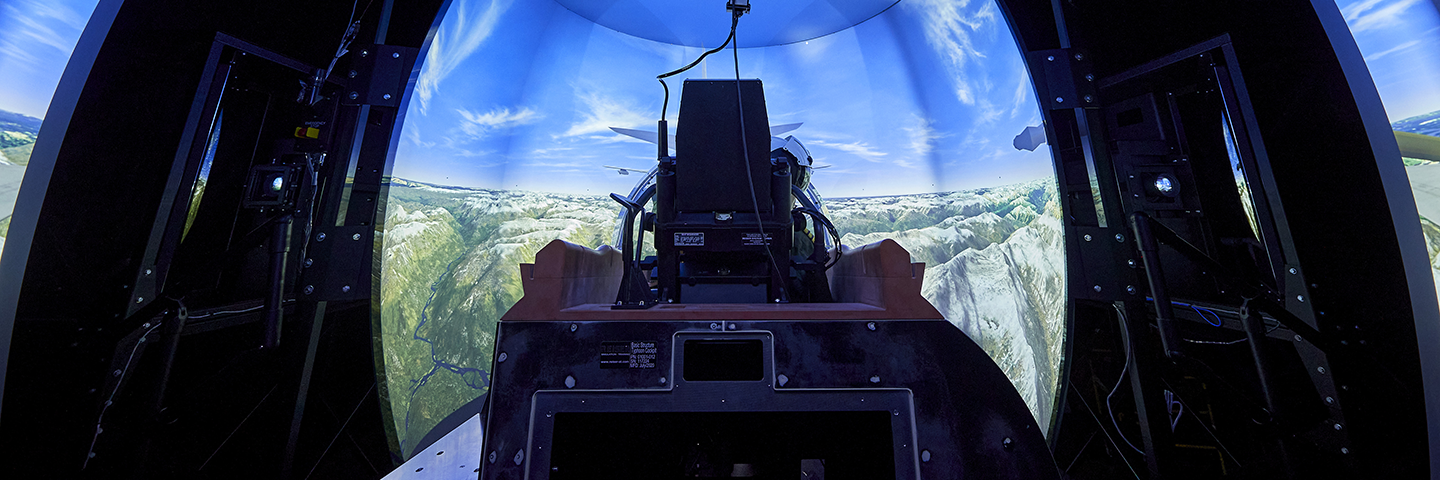
Ten United States Air Force cadets have begun their training at the International Flight Training School (IFTS) in Decimomannu (Cagliari, Italy), born from the collaboration between the Italian Air Force and Leonardo, a global benchmark for advanced pilot training.
Starting on 8 September 2025, the Decimomannu air base, home to the International Flight Training School, is hosting the first “Multiphase Jet Training” course, the result of an agreement signed in August between the Italian Air Force and the US Air Force. The programme will enable ten US Air Force cadets – the first American pilots to train outside the United States – to obtain their military pilot licence on Leonardo's M-346, designated T-346A by the Italian Air Force.
The agreement marks a new milestone in the consolidation of IFTS's international role, confirming its leading position in international aeronautical training. The Decimomannu school is capable of training over eighty pilots per year, thanks to innovative technologies such as that on-board of the M-346 and the integration of real and virtual flight experiences.

IFTS was born in 2018 from a strategic collaboration between Leonardo and the Italian Air Force, with the aim of creating an advanced flight training centre for military pilots from air forces around the world. Today, the academy is an international benchmark offering a new model of education and training that has already been chosen by 15 countries (Italy, Saudi Arabia, Austria, Canada, Germany, Japan, the Netherlands, Qatar, the United Kingdom, Singapore, Spain, the United States, Sweden, Hungary and Croatia).
Combining the experience and tradition of the Italian Air Force in the field of military flight training with Leonardo's technological innovation, IFTS trains pilots for the so-called phase 4, “Lead-In to Fighter Training”, the most advanced stage of the training syllabus, which prepares them for flying front-line fighter aircraft. Equipped with state-of-the-art training facilities, the Decimomannu campus has 22 M-346 aircraft, a logistics and maintenance centre with hangars and a flight line, as well as a comprehensive Ground Based Training System (GBTS). There, thanks to a full set of innovative and immersive simulation systems, students are trained in an environment that combines real and simulated reality, thanks to Live, Virtual and Constructive (LVC) technology.
The integrated training system developed by Leonardo for IFTS is centered around the M-346 Advanced Jet Trainer and the associated GBTS, world benchmark for training pilots destined for latest-generation fighter jets. The M-346 is equipped with avionics aligned with operational fighter standards and on-board integrated simulation capabilities, allowing complex tactical scenarios to be replicated in flight.
Ground training is based on a complete suite of simulators:
for initial training
for flight and navigation procedures training with augmented reality and artificial intelligence
for specific training
for advanced training missions
The campus is also designed to minimise environmental impact, with energy-efficient buildings, sustainable management systems and residential facilities for both students and staff.

total area, of which 35,000 square metres is covered

and seven advanced simulators

trained each year

and 8,000 hours of simulation per year

among military personnel and civilians

qualified by 2025, two-thirds of whom will be non-Italian
Leonardo guarantees operational support for IFTS by providing integrated logistical support services for aircraft and simulator fleets, flight instructors and campus management services. In addition, Leonardo CAE Advanced Jet Training, a joint venture established in 2021 through international collaboration with CAE, supports Leonardo in the services it offers.

 media hub




